Report Line
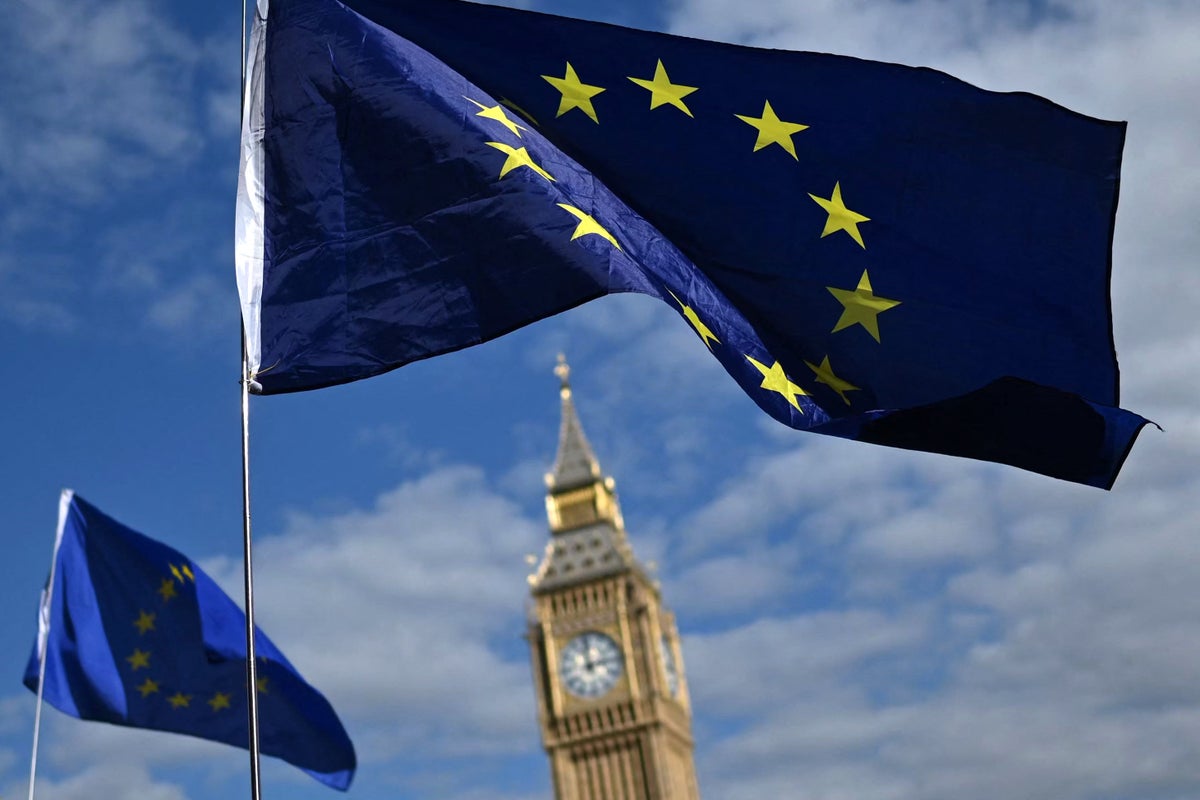
W hen Andy Burnham made his polite and modest suggestion that there should be an “honest discussion” about reinstating freedom of movement between Britain and the European Union, it was taken to mean that what he envisaged as a “very factual, quite evidence-based debate” would be taking place among the great British public. It would now appear that discussions along the same lines are taking place at an official level with the European Commission in Brussels. Even allowing for the prime minister’s openly stated views on Britain’s European destiny, this is something of a surprise.
Coming at Halloween, some have reacted as if the horrible, zombified arguments from the Brexit referendum had suddenly been revivified. Cue some entirely predictable and performative outrage among the usual suspects about “Brexit betrayal” – as if trying to move on from the most grievous act of national self-harm since the Second World War was somehow the unpatriotic, even treacherous thing to do. Yet the debates that Mr Burnham has begun both at home and with European partners – about freedom of movement and the options for a new and more mutually beneficial relationship with the EU – are as necessary for both sides as they are inevitable.
Despite a national yearning to forget about the traumas of Brexit, the economic damage is still being inflicted on the UK economy, as well as upon standards of living and the tax revenues available to fund good public services. Brexit was not a one-off event, but a process. As such, it has proved the malign gift that keeps on giving.
That cannot be ignored. The EU remains the largest trading bloc on earth, and even though some of its leading economies are under visible strain, it is still a potentially lucrative market for British businesses, and also a source of talent and labour that the UK can sometimes lack – as it was during the long period of British membership after 1973. It is also too often forgotten that the EU was a source of employment and advancement for British citizens who sought to work, trade, retire or study across the rest of the continent.
There are some well-rehearsed arguments against reinstating freedom of movement , but it is first necessary to define what it means, and what it does not mean in practice under current EU rules. The principle is that all EU citizens have the general right to move and reside freely within any EU member state, but with conditions. After a three-month grace period, people have to be employed or be otherwise financially independent, arrange their own health insurance, or be legitimately enrolled as a student.
If such a policy came to reality in the UK, it would mean that employed EU citizens would qualify for the same working-age benefits as anyone else, which is surely fair and efficient, as it removes poverty and income traps and improves the incentive to earn more, which is the aim of the universal credit system. Such a system would be a radical change in the lived experience of the UK post-Brexit, but it should be set against that reality: acute shortages of labour, a wage-price inflation spiral and the Boriswave. Freedom of movement would undoubtedly impact the labour market – but it is a fallacy that any economy has a fixed number of jobs, and that there are always British workers who can be employed for every vacancy.
If European migration boosts our GDP, that would create more jobs for all. The UK certainly has an issue with Neets, but the situation has actually worsened post-Brexit. In any case, the million-plus not in work, education or training appears to have more to do with Covid and long-standing shortcomings than competition from foreign workers attracted by the vacancies that the British cannot fill.
Restricting the supply of labour from the EU after 2020 has choked off British economic growth and delivered no discernible net benefits to the unemployed. Parts of the country boom while others languish. That can no longer be blamed on the EU.
Some of Britain’s underemployed workforce might want to exercise a new right to take advantage of employment or educational opportunities in Europe, temporarily or permanently. Such are the “honest discussions” that need to be had. In truth, they may echo those from a decade ago, but the point is that the British have now lived with the economic impact of Brexit for a decade – the pound was plunging before referendum night was over – and can make a rational choice about the way ahead.
Some will still favour the status quo, as the Conservatives do. Others may say that Brexit has been a flop because it wasn’t done properly – the case Reform UK makes to renegotiate an even “harder” Brexit. The Liberal Democrats wish to rejoin the EU’s single market (including free movement) as soon as possible.
Mr Burnham isn’t so clear. This is a fault in a leader, but it does have the benefit, for now, of allowing him to gauge where sentiment on the issue in Britain and in the EU respectively now rests, and where a new deal might land. Before too long, however, he’ll need to tell us what he really thinks.
Source: The Independent